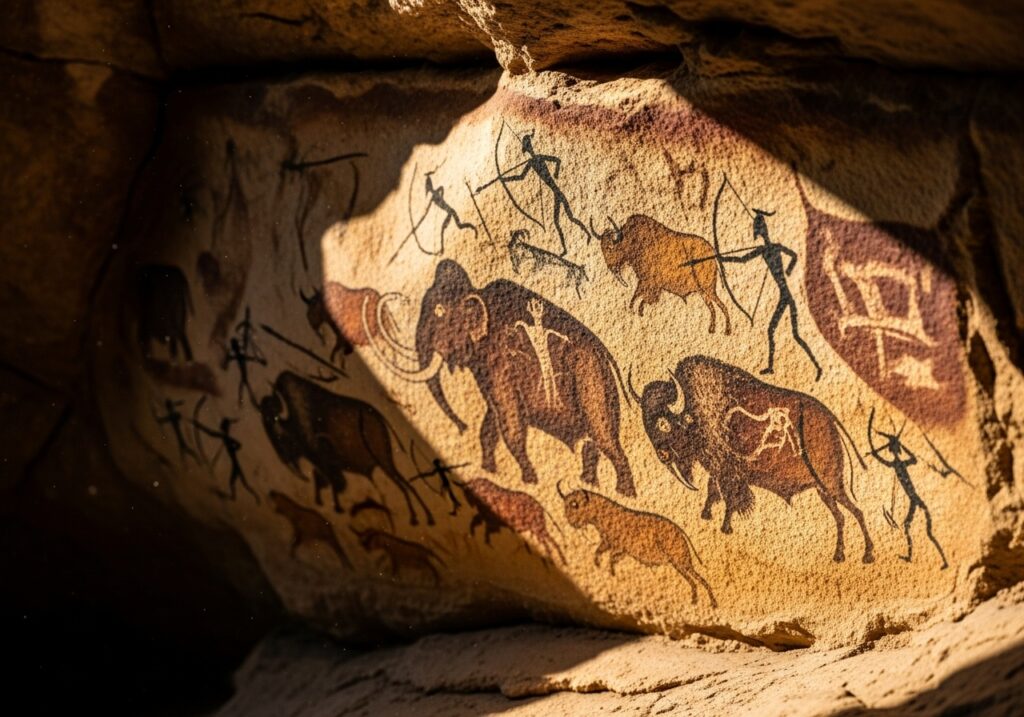
When you think about refreshing your home’s interior with a new coat of paint, you’re participating in one of humanity’s oldest artistic traditions. Recent archaeological discoveries have revealed that humans have been applying pigment to walls for at least 67,800 years, with stunning hand stencils and narrative scenes discovered in Indonesian caves. These ancient masterpieces offer surprising insights that continue to influence modern painting techniques and interior design choices today.
The Timeless Appeal of Wall Art
The oldest known cave paintings, found in limestone caves on Indonesia’s Sulawesi island, demonstrate that our ancestors understood something fundamental about their environment: walls are powerful canvases for expression and transformation. These early artists created hand stencils with deliberately shaped, claw-like fingers and complex narrative scenes featuring human figures interacting with animals. According to research published in Nature, these paintings reveal sophisticated abstract thinking and storytelling capabilities that emerged tens of thousands of years ago.
What’s remarkable is how these ancient techniques parallel modern interior painting principles. Just as cave painters used the natural texture and contours of rock surfaces to enhance their artwork, contemporary interior painters consider wall texture, lighting angles, and architectural features when planning colour applications and decorative finishes.
Ancient Pigments, Modern Palettes
The red ochre pigments used in prehistoric cave art were derived from natural iron oxide minerals, the same fundamental compounds that form the base of many modern earth-tone paints. These ancient artists understood colour permanence and how pigments interact with mineral surfaces, knowledge that informs today’s paint chemistry. The Smithsonian Magazine notes that early humans carefully selected and prepared their pigments, demonstrating an intuitive grasp of material properties that professional painters still rely upon.
When planning your interior painting project, consider how natural, earth-based colour palettes create the same sense of warmth and connection that drew humans to decorated spaces for millennia. Ochres, siennas, and umbers remain popular choices precisely because they echo these primal aesthetic preferences.
The Psychology of Painted Spaces
Perhaps the most profound lesson from prehistoric cave art is the psychological impact of transformed spaces. These weren’t simply decorated walls, they were gathering places and cultural touchstones. Research from the National Gallery of Art suggests that our responses to colour and decorated environments are deeply rooted in evolutionary psychology, explaining why certain colour combinations feel instinctively “right.”
Modern interior painting serves the same transformative purpose. A freshly painted room doesn’t just look better; it fundamentally changes how you feel in the space, creating atmospheres that range from calming sanctuaries to energizing workspaces.
Bringing Ancient Wisdom into Modern Homes
Professional painters today are custodians of a 67,000 year old tradition. Whether you’re considering a subtle refresh or a bold colour transformation, remember that you’re engaging with humanity’s oldest form of environmental art. The walls of your home, like those ancient cave surfaces, are waiting to tell your story.